

A sign can be designed anywhere. It can be fabricated in another state. But at some point, that sign has to go from a crate to a finished installation — permitted, engineered, set in concrete, wired, and inspected. That’s where the local sign company becomes the most important part of the project.
We’ve been on both sides of this. We design and fabricate signs in our own shop every day. And we’re regularly brought in by manufacturers and national sign companies to handle the on-the-ground work that can’t be done remotely: pulling permits, pouring footings, coordinating with building departments, and managing installations that require local knowledge no spec sheet can provide.
What “Local Expertise” Actually Means
It’s not just geography. It’s knowing the specific requirements that change from one jurisdiction to the next — sometimes from one side of a street to the other.
On the Central Coast, a sign project might fall under the City of Monterey, Carmel, Pacific Grove, Seaside, Marina, Salinas, Watsonville, Santa Cruz County, or unincorporated Monterey County. Each has different sign codes, different permitting processes, and different timelines. Some require design review. Some require structural engineering calculations. Some have height and illumination restrictions that aren’t obvious until you’re already at the counter.
A sign company in another state doesn’t know any of that. They send the specs, ship the sign, and need someone local who can get it from the loading dock to a legal, inspected installation.
Permitting Is Where Projects Stall
The most common place a sign project loses weeks — sometimes months — is permitting. The sign is fabricated and ready, but nobody pulled the permit, or the application was incomplete, or the jurisdiction requires drawings that weren’t part of the original package.
We handle sign permitting across the Central Coast. We know what each city requires, how to prepare a complete submittal, and how to navigate design review when it applies. For projects that come to us from out-of-area fabricators, permitting is often the first thing we take on because it has the longest lead time.
Footings and Site Work Require Boots on the Ground
Monument signs, pylon signs, and freestanding structures don’t just bolt to a wall. They need engineered foundations — concrete footings sized and placed based on the actual soil conditions, wind loads, and seismic requirements of the specific site.
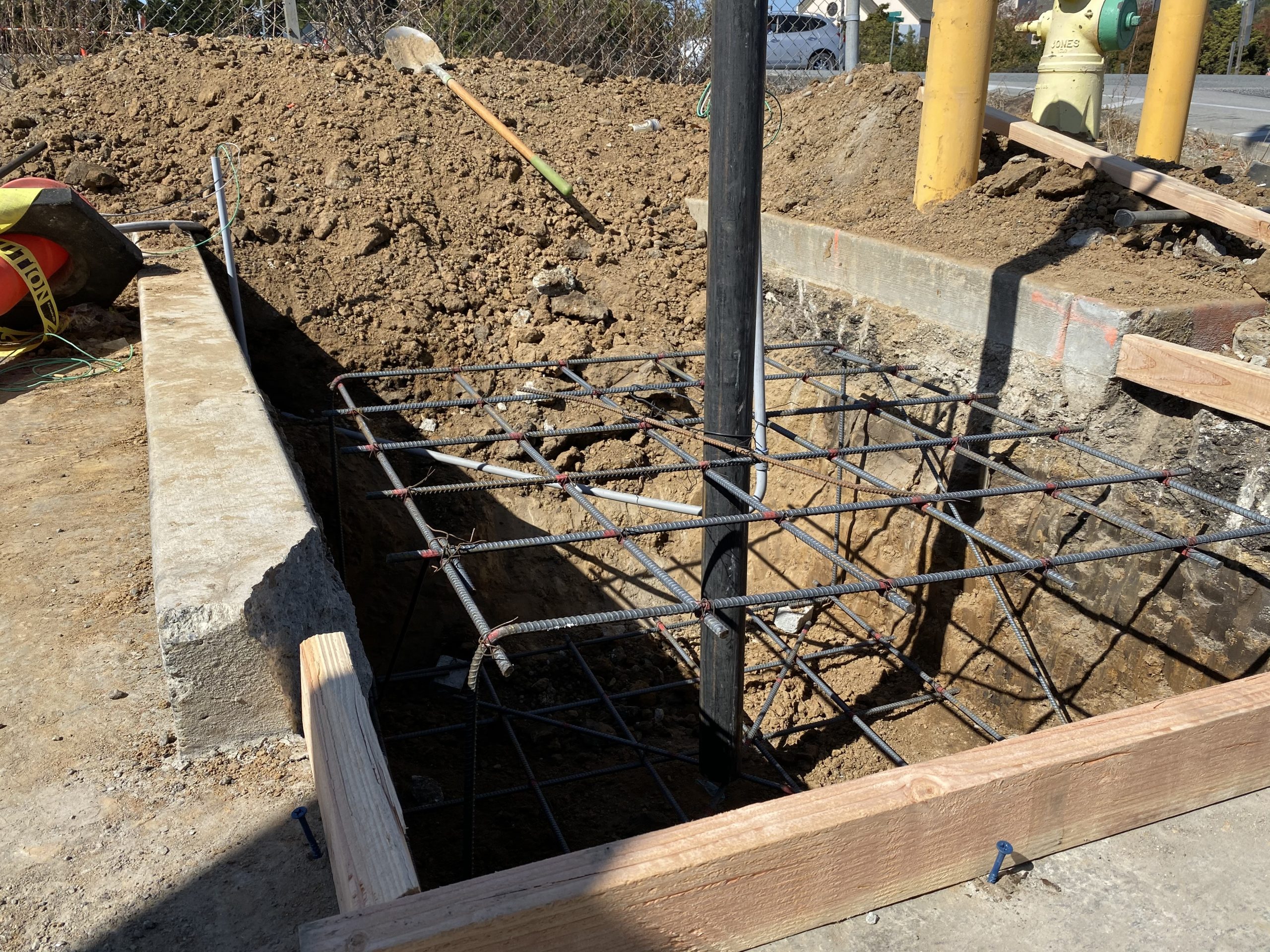
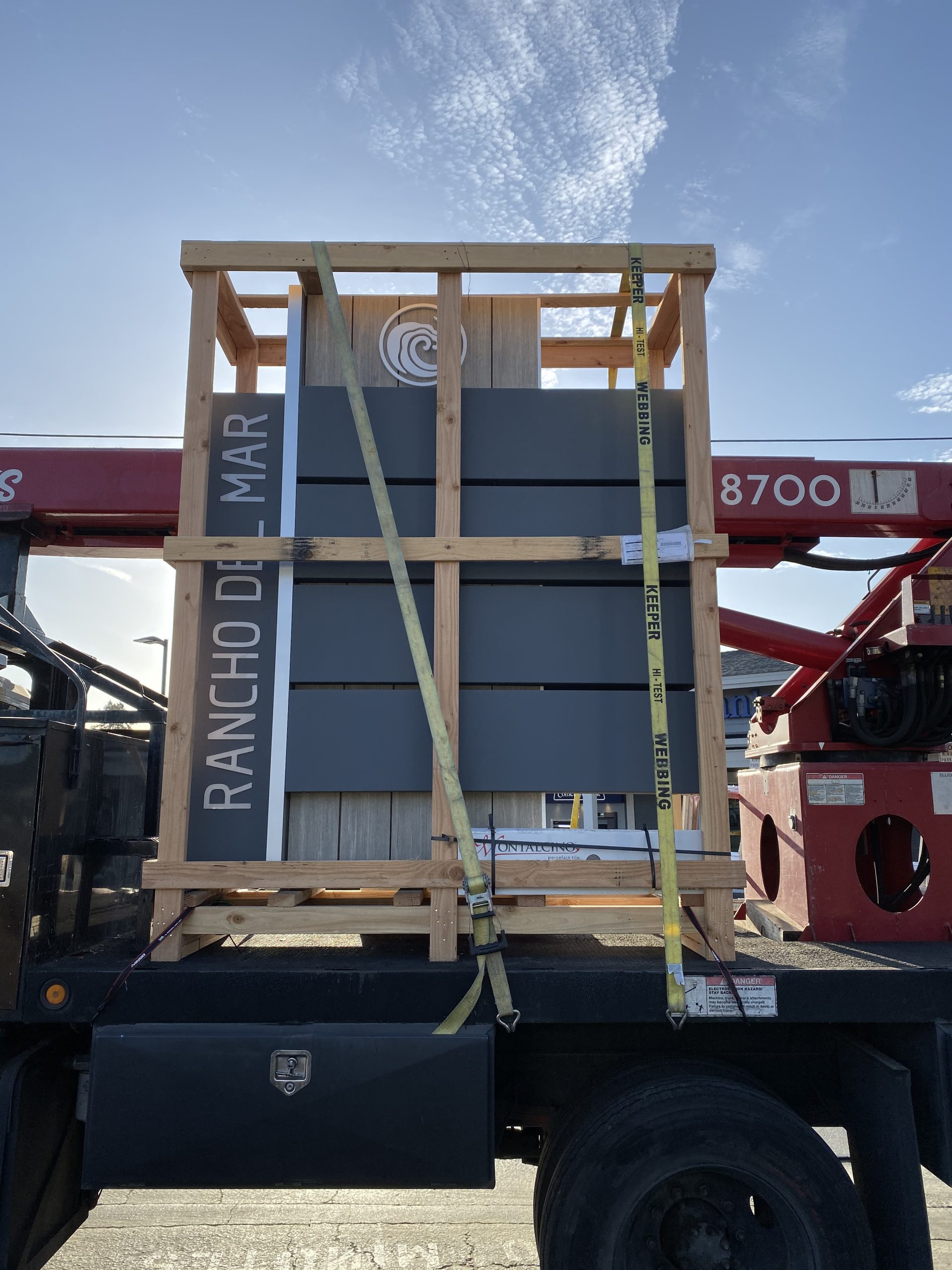
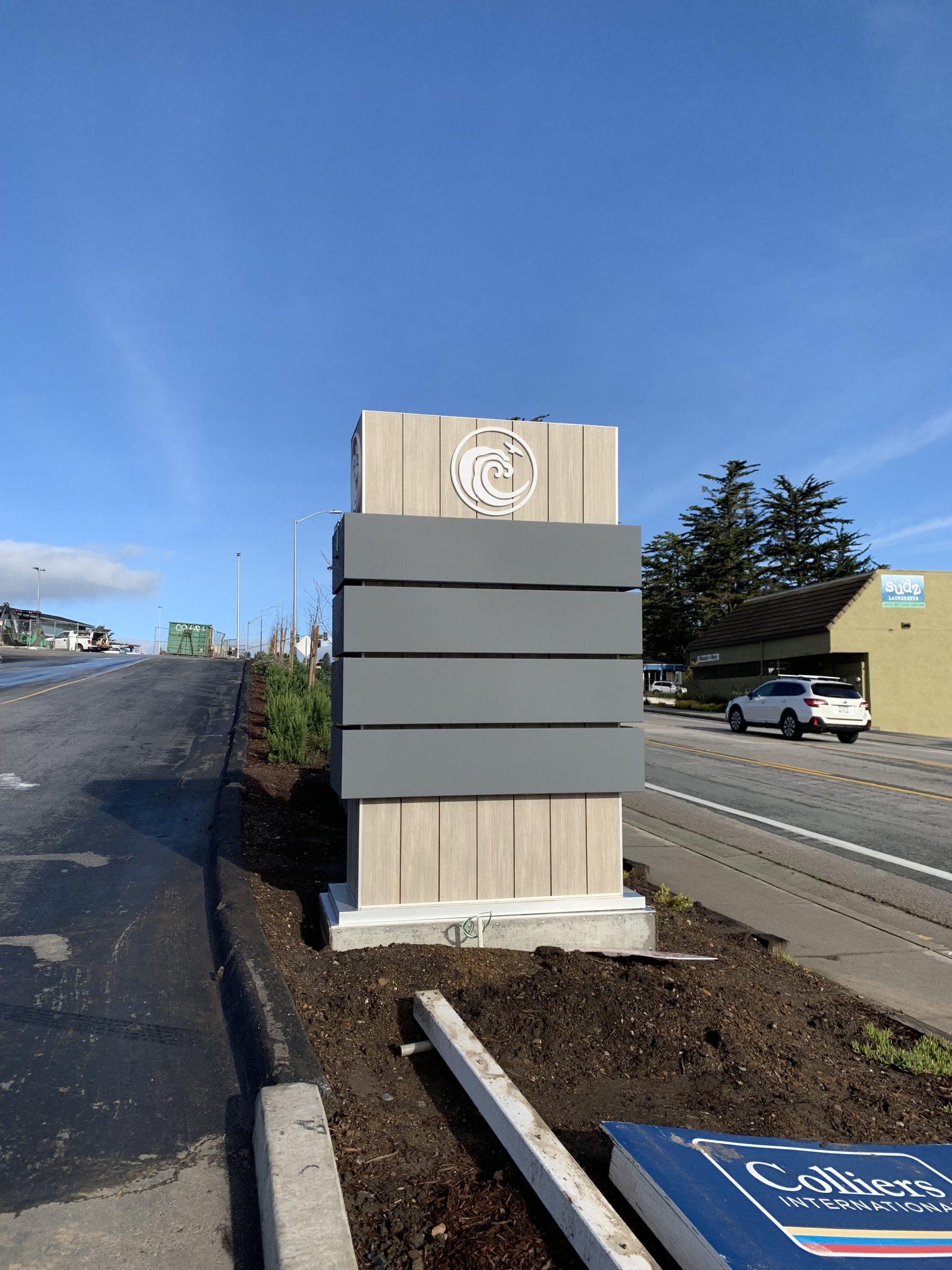
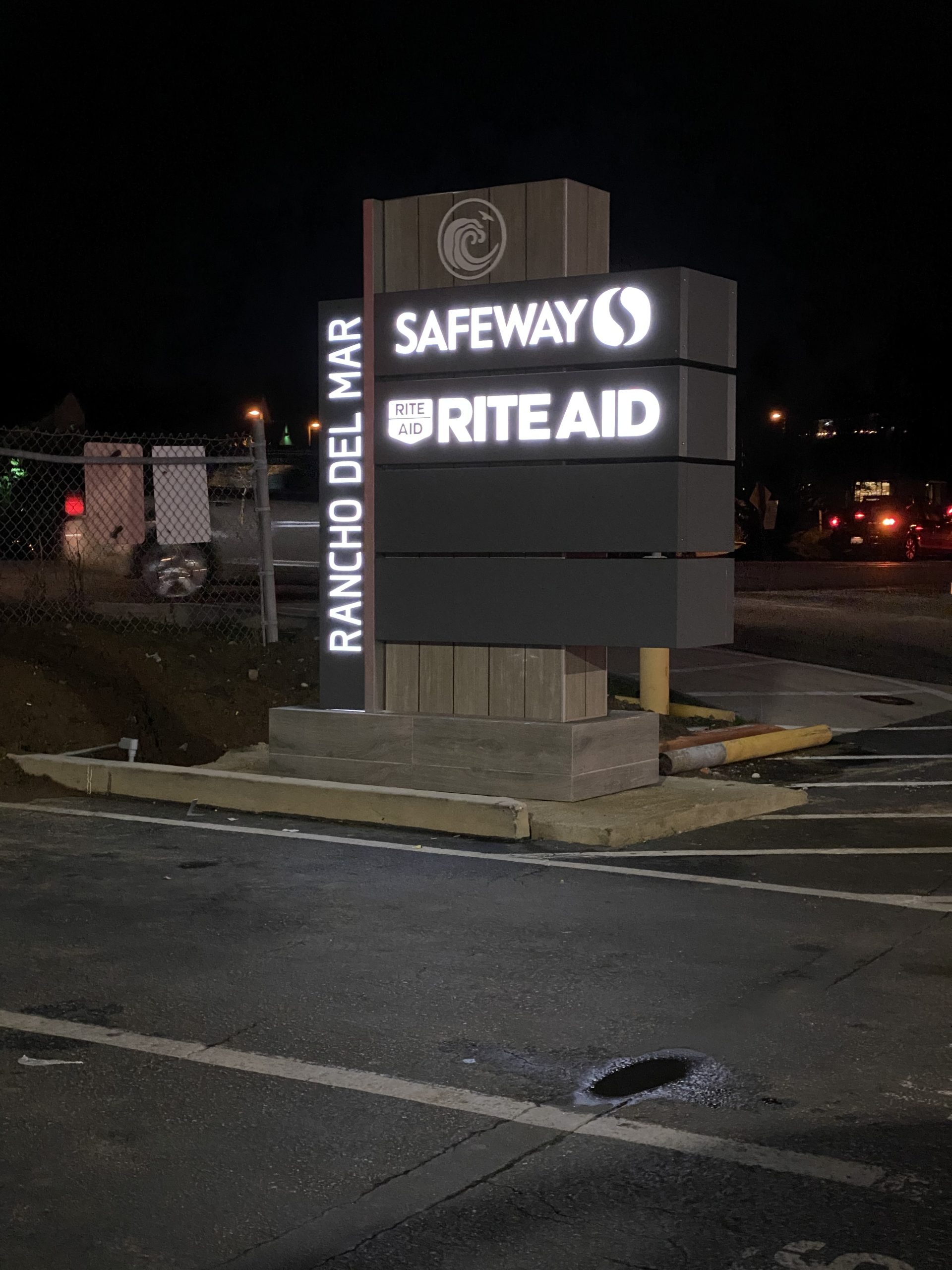
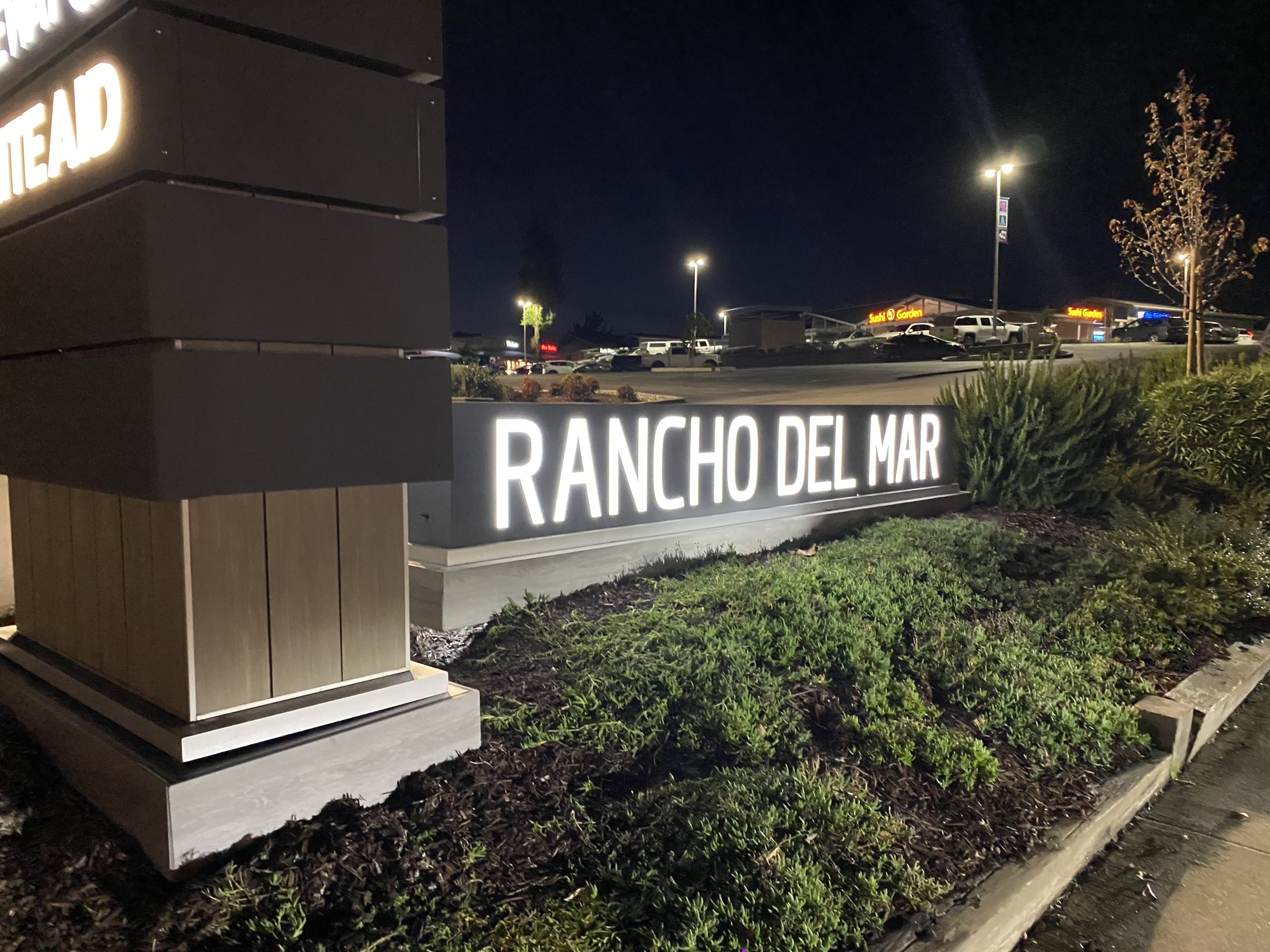
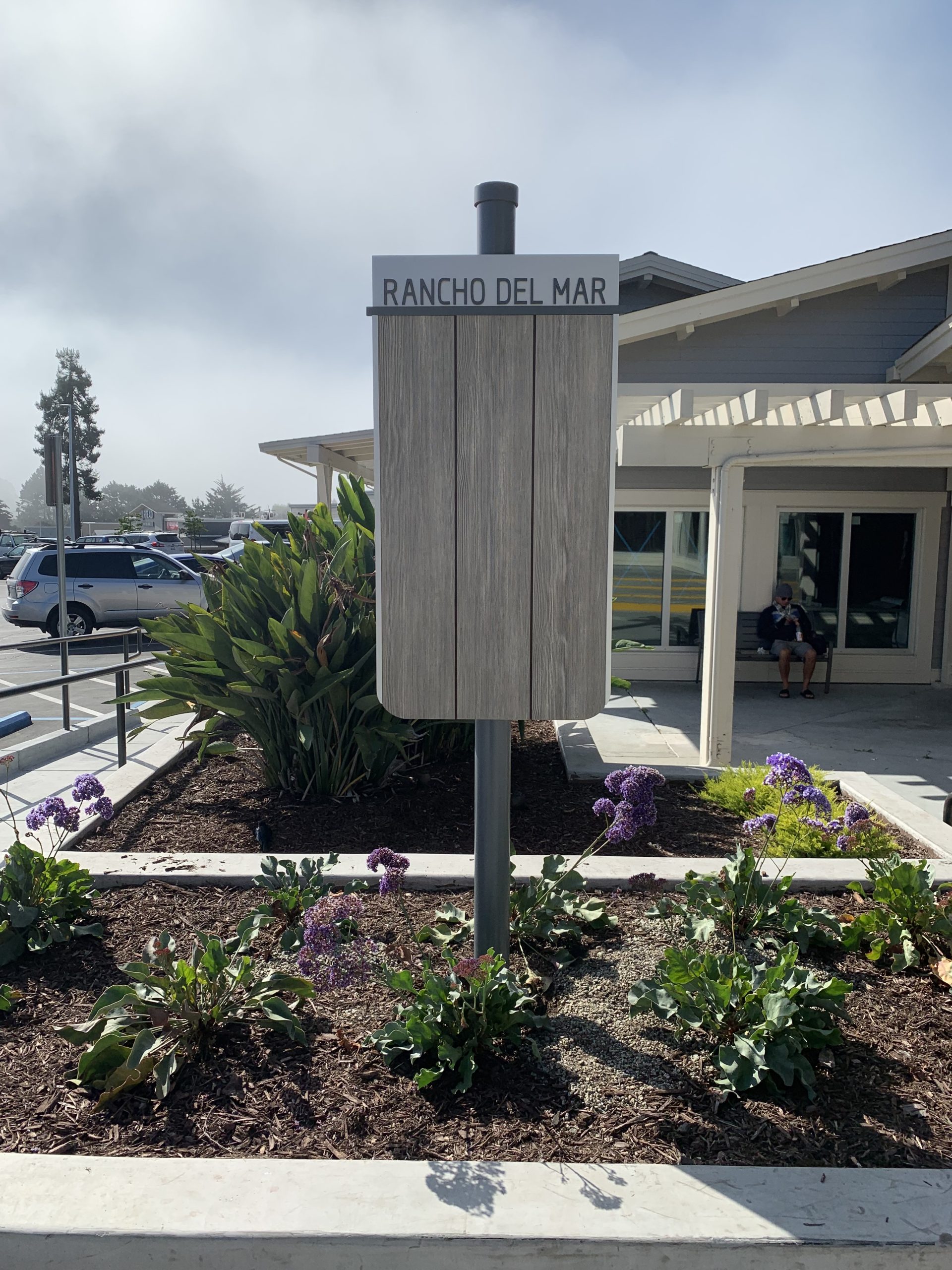
At Rancho Del Mar in Aptos, we were brought in as the installation partner for the shopping center’s sign program. We permitted the project, then coordinated and performed all the footing work and installation. The signs were manufactured elsewhere, but the site work — the part that determines whether those signs stand level and stay standing — was ours.
That’s not unusual. It’s how a lot of large commercial sign projects work, and it’s the part that requires a team that knows the local conditions. Soil composition in the Salinas Valley is different from coastal Monterey. Wind loads at a highway-facing site in Prunedale are different from a sheltered courtyard in Carmel. You can’t pour a footing from a spec sheet alone.
Installation Is More Than Hanging a Sign
Even wall-mounted signs on commercial buildings involve more than people expect. Older stucco and masonry buildings on the Peninsula need specific mounting solutions. Electrical connections for illuminated signs require licensed work and inspection. Multi-tenant properties have access restrictions, coordination with other tenants, and sometimes lift equipment that has to navigate tight parking lots.
We’ve installed everything from individual tenant signs at retail centers to full interior and exterior packages for national brands — projects where the brand sends detailed specs and the local partner makes them work in the real world. The specs arrive precise and polished. Translating them to a specific building, with specific site conditions, under specific local codes — that’s the work.
When You Need a Local Sign Partner
Not every project requires this. If you’re a small business ordering a simple wall sign from a local shop, everything happens under one roof. But for larger projects — shopping centers, multi-building facilities, national brand rollouts, rebrands across multiple locations — there’s usually a point where someone needs to be on-site, working with the local building department, managing the physical installation.
That’s what we do. Whether we’re building the sign from scratch in our shop or receiving one that was fabricated across the country, the on-the-ground execution is what gets the project finished. Permitting, engineering, footings, installation, inspection — the work that turns a sign into a legal, permanent, professional installation.
If you have a sign project on the Central Coast that needs local execution — whether you’re a property manager, a general contractor, or a national sign company — give us a call.

Leave A Comment